Microfossils · Water · Coastal Health · Jumeirah Beach, Dubai
Six teams. Six sites. One tidal moment. The first citizen science foraminifera study ever conducted in the UAE — and several taxa recorded on iNaturalist for the first time in the world.
Foraminifera — foram, for short — are single-celled marine organisms that have existed for over 500 million years. They build intricate calcium carbonate shells. They live in the sediment. And they respond almost immediately to changes in salinity, pollution, temperature, and disturbance.
In short: they are the ocean's diary. Every environmental shift gets written into their shells and their populations. If you know how to read them, the beach tells you everything about how it is being treated.
Most people have never heard of them. After this event, 25 people in Dubai could identify them under a microscope.
Sediment pH recorded along six shoreline sites. Lower than open seawater due to organic matter decomposition, microbial respiration, and reduced water exchange — consistent with an urbanised, heavily groomed beach environment.
A wide salinity range for a small spatial scale — driven by evaporation, limited water exchange, and tidal inconsistency. Only stress-tolerant foraminifera thrive here. A direct signature of urbanisation.
Winter sea surface conditions in the southern Arabian Gulf. A seasonally stable baseline — against which future summer and transitional surveys can be compared.
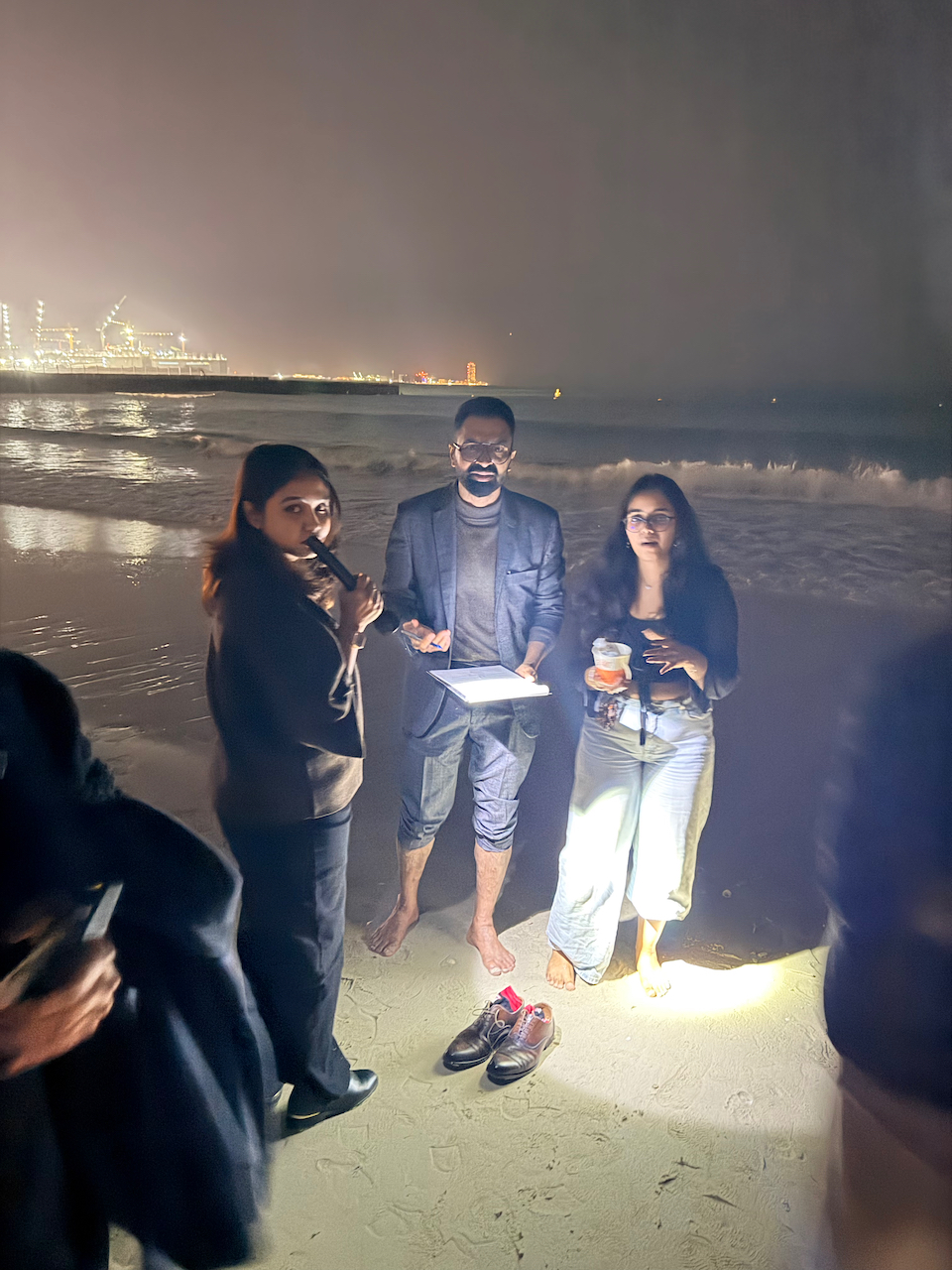
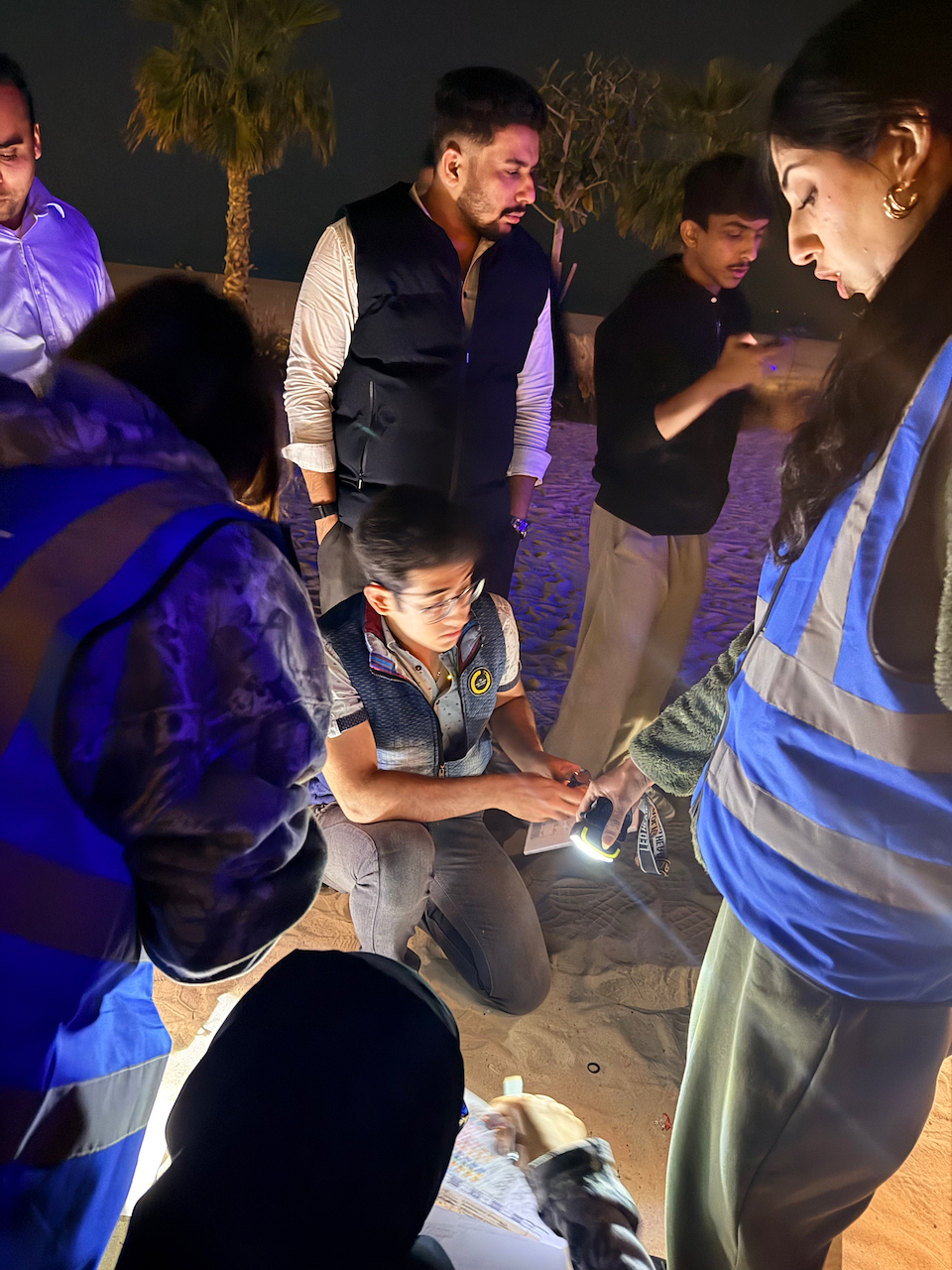
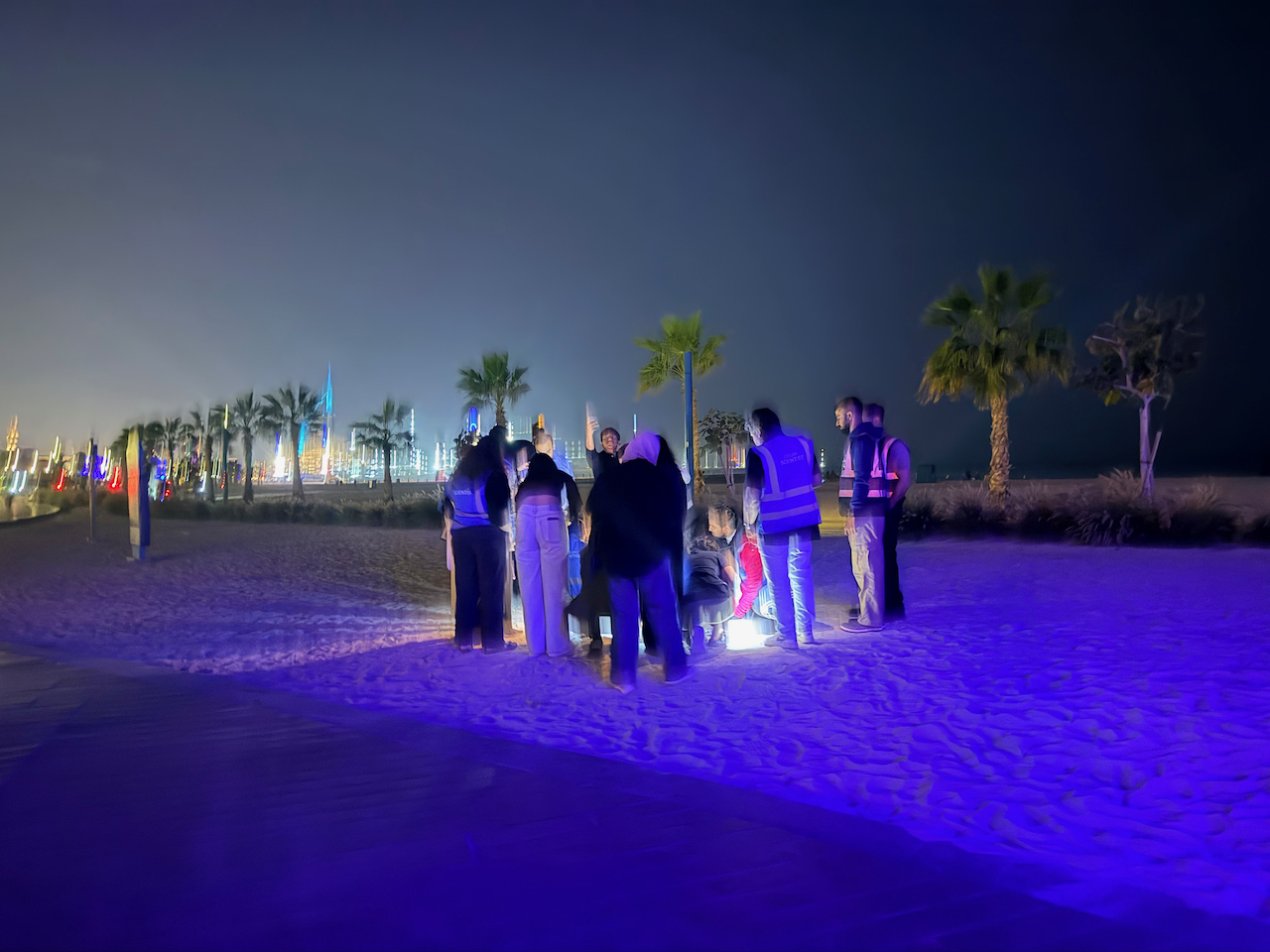
Six teams. Six fixed shoreline locations. Sampling at the exact same tidal moment — creating a comparative snapshot of coastal health across an entire urban beach gradient. This is what makes it research, not a walk.
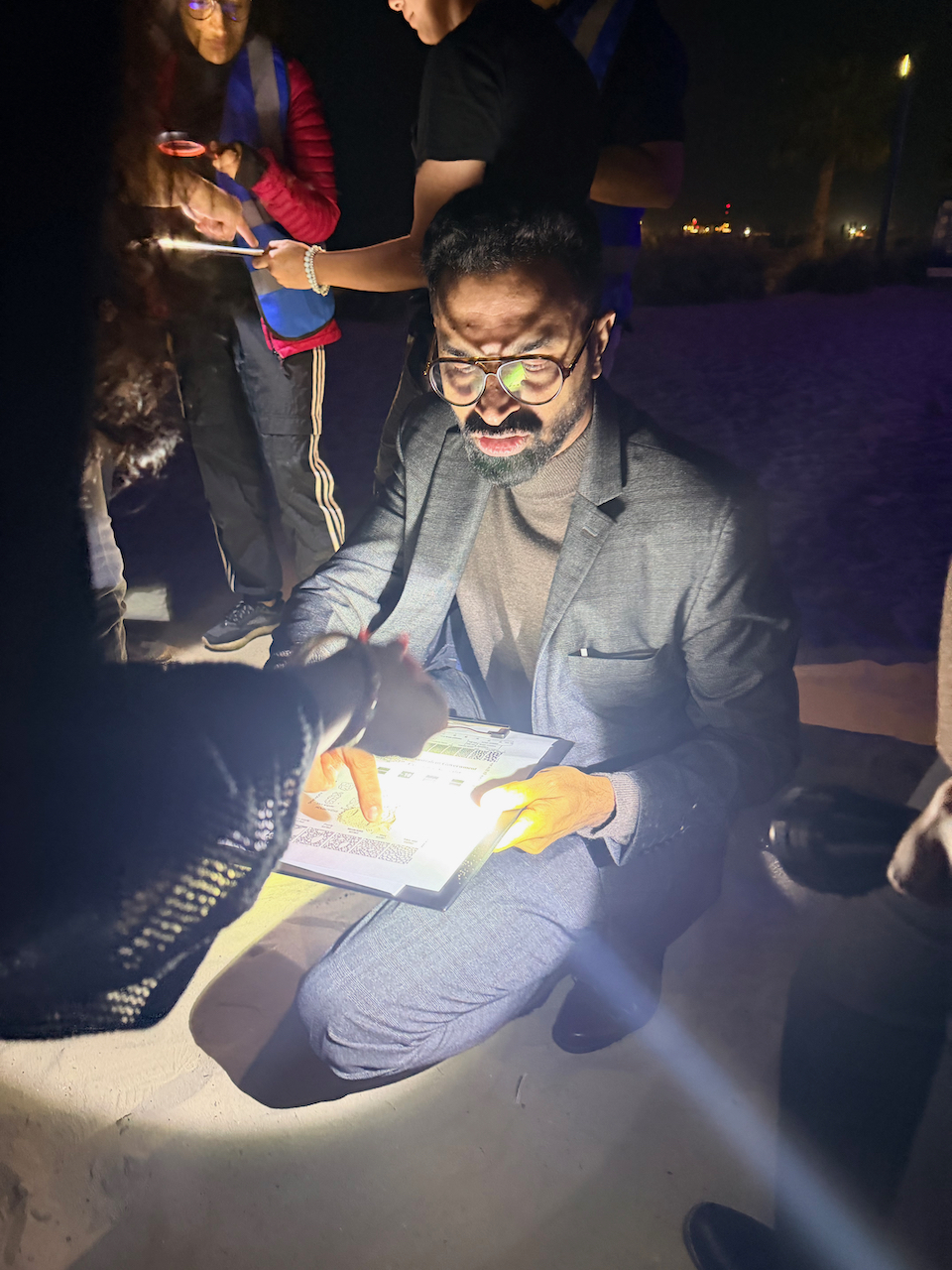
Triplicate cores, depth-stratified to approximately 10 cm. Upper 1–2 cm yielded unexpectedly high foraminiferal abundance — consistent with their ecology at the oxygenated sediment-water interface.
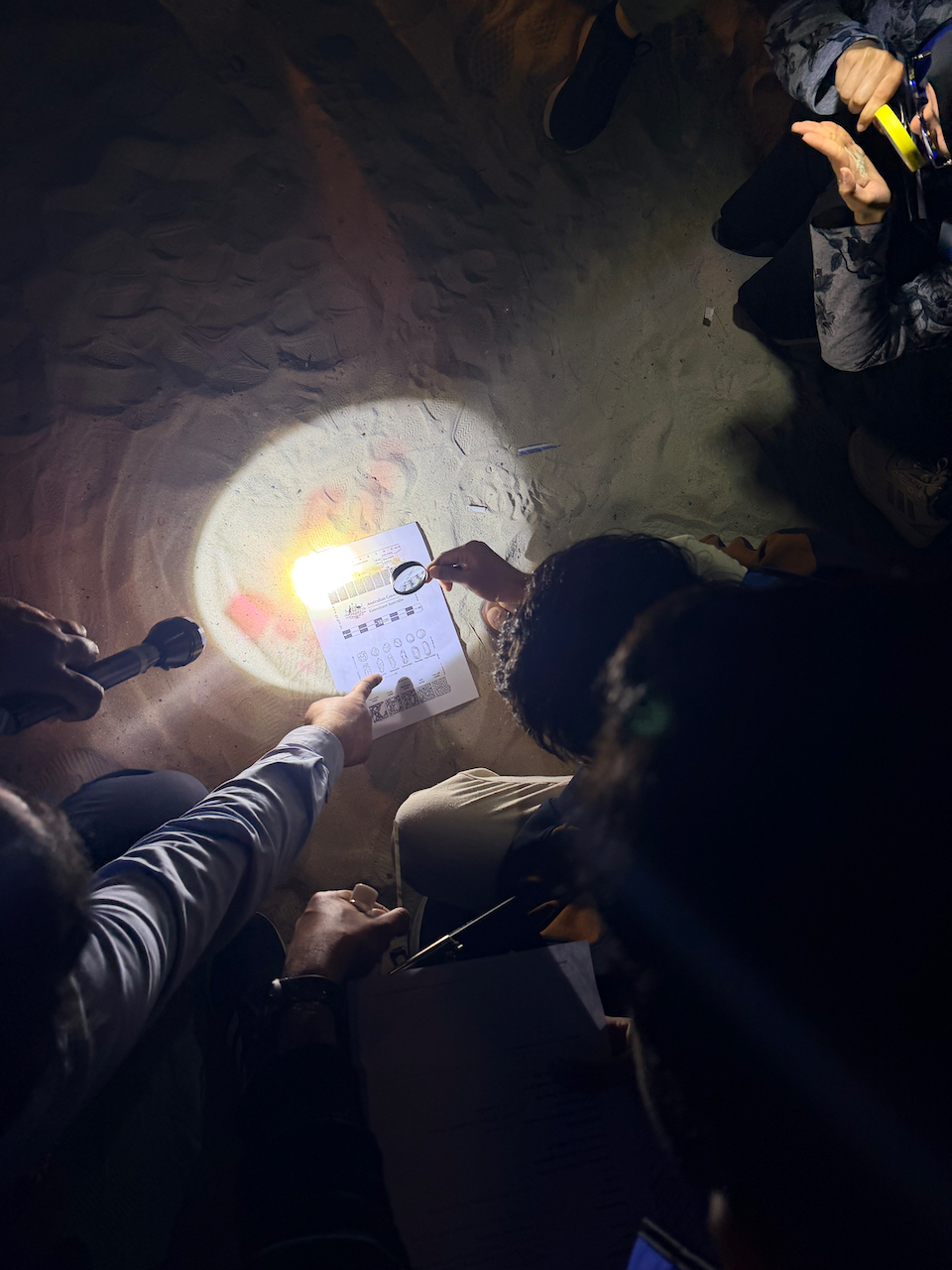
pH, salinity, temperature, and qualitative observations recorded simultaneously at all six sites. Six on-site coordinators ensured protocol consistency across the gradient.
Specimens photographed and uploaded to the global iNaturalist platform — contributing to open-access biodiversity records. Several taxa had never previously been recorded on the platform anywhere in the world.
All participants attended a digital walkthrough of sampling protocol the night before — ensuring that citizen scientists arrived prepared and confident in their role.
Lead biodiversity expert Erfan Firouzi anchored scientific rigour — interpreting assemblage composition, vertical distribution patterns, and the ecological significance of what participants were finding in their hands.
Komorebi designed the entire participant experience — from the event brief and field forms to the visual identity, impact report, and post-event documentation that made the science accessible and beautiful.
Despite mechanical grooming, foot traffic, and the extreme conditions of the Arabian Gulf, Jumeirah Beach holds a living, layered, scientifically significant ecosystem in its sediment. You just have to know where to look.
Multiple morphotypes and shell types — including calcareous and potentially agglutinated forms. Notable given the urbanised nature of the study area, the limited sampling window, and the extreme conditions of the Arabian Gulf.
The dominance of euryhaline, stress-tolerant taxa reflects the impact of mechanical beach grooming — a highly dynamic but disturbed microhabitat where salts concentrate, organic matter decomposes, and sensitive species cannot survive.
A clear vertical stratification — fewer taxa, lower abundance below the upper 1–2 cm. Consistent with reduced oxygen, lower food input, and increased sediment compaction. The foram ecology matches the theory precisely.
The broader significance: urban beaches that appear biologically empty are not. The hidden layer of microscopic biodiversity is there — and it is responding to everything we do to the shore.
Photographs from the citizen science evening at Jumeirah Beach — sampling tools laid out on the sand, university students taking their first sediment cores, and the quiet choreography of a community learning to read what the tide leaves behind.
"Triplicate cores, depth-stratified. Hands learning what instruments taught them."
"After this evening, 25 people in Dubai could identify a foram under a microscope."
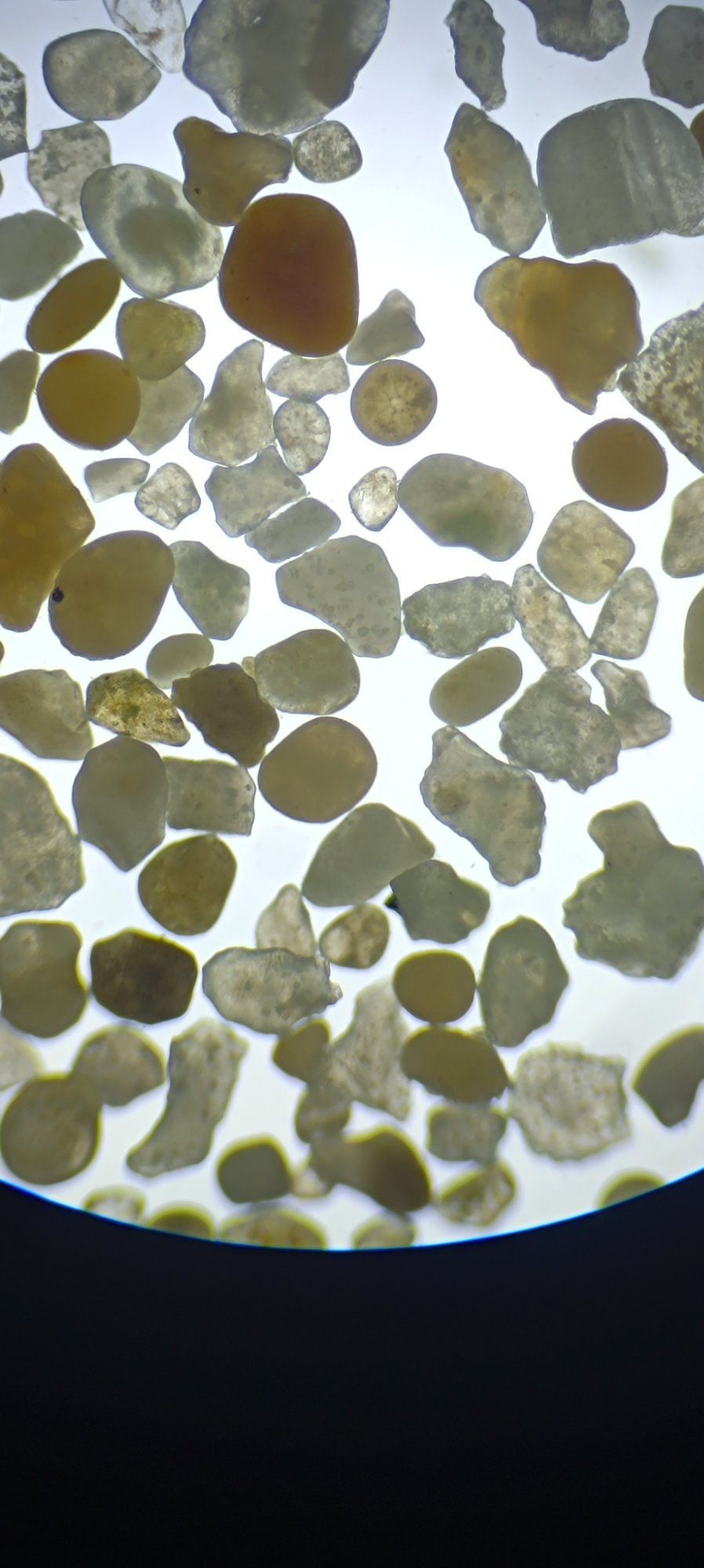
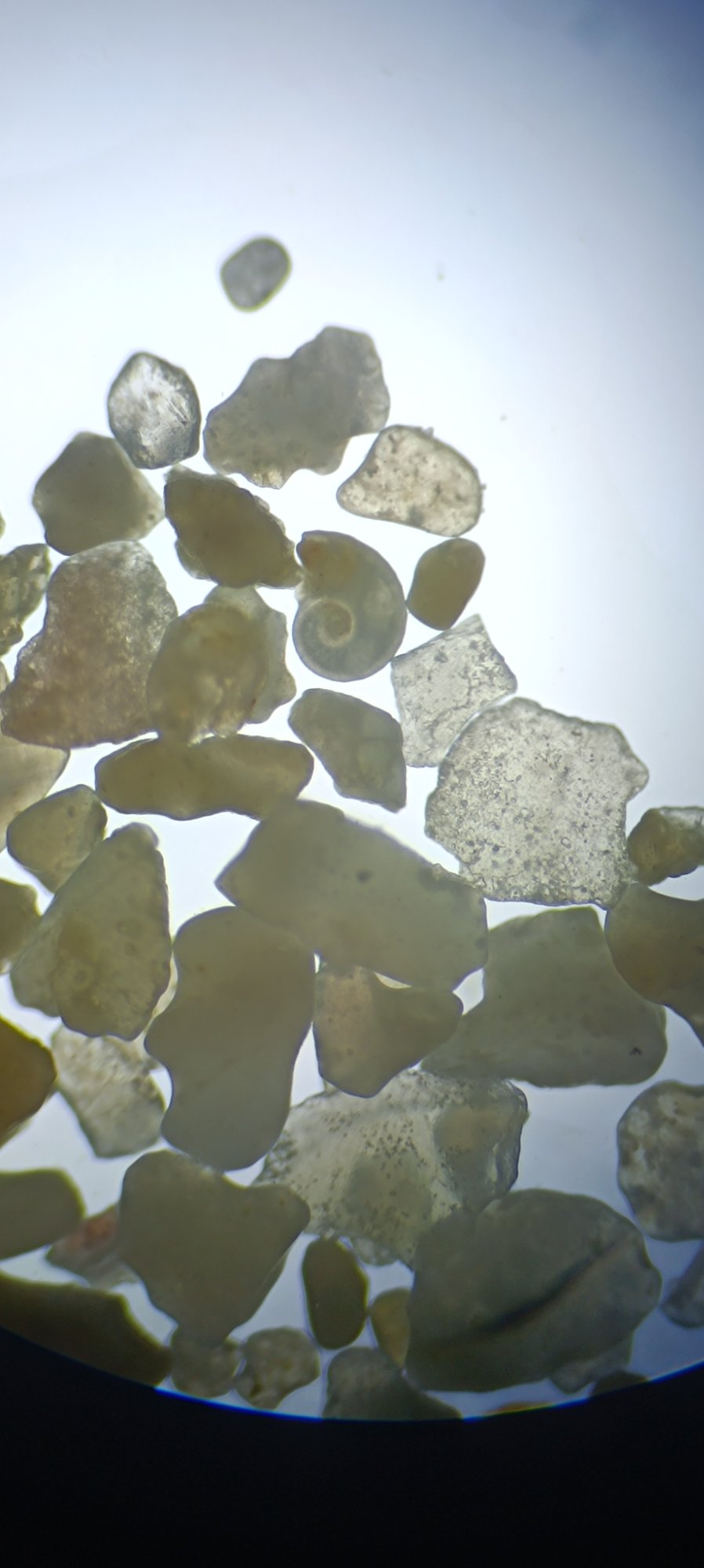
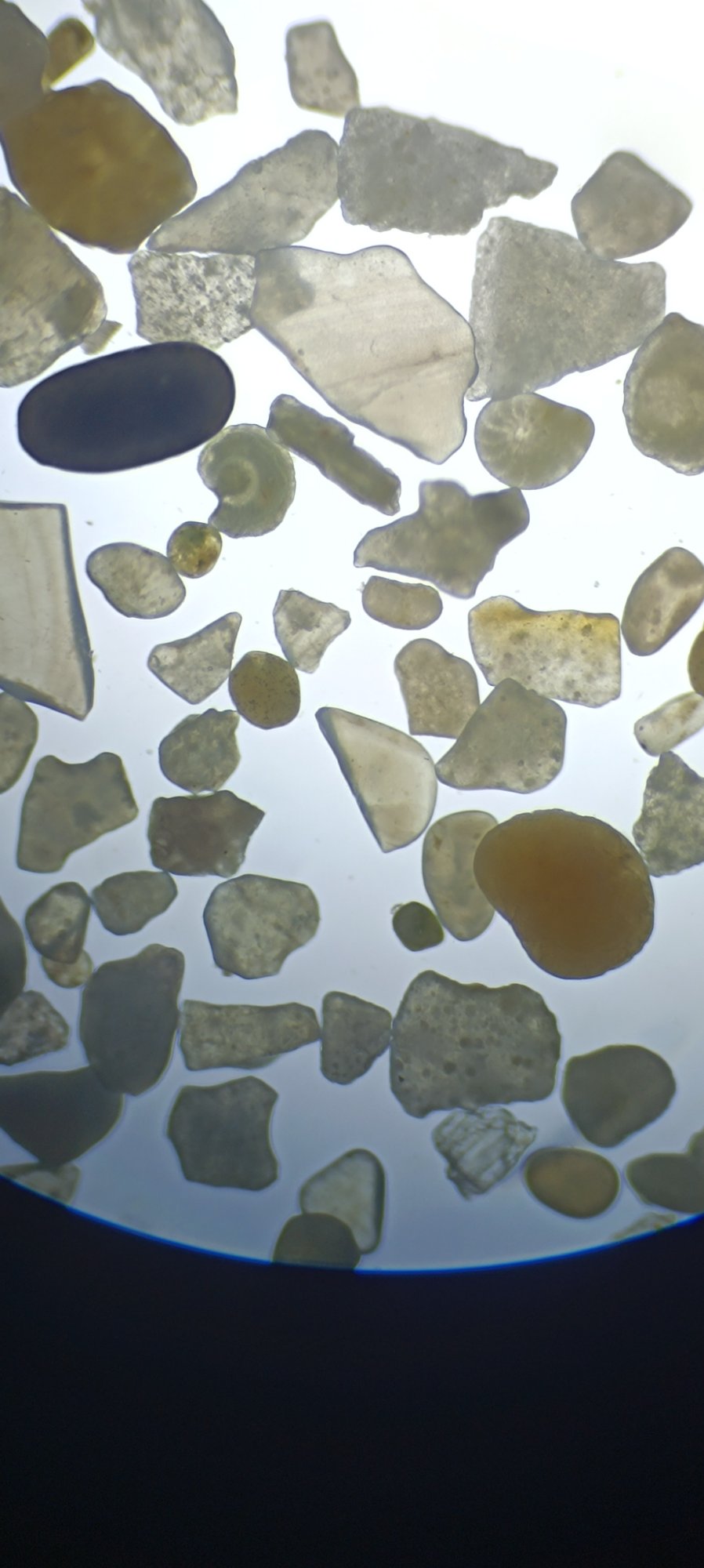
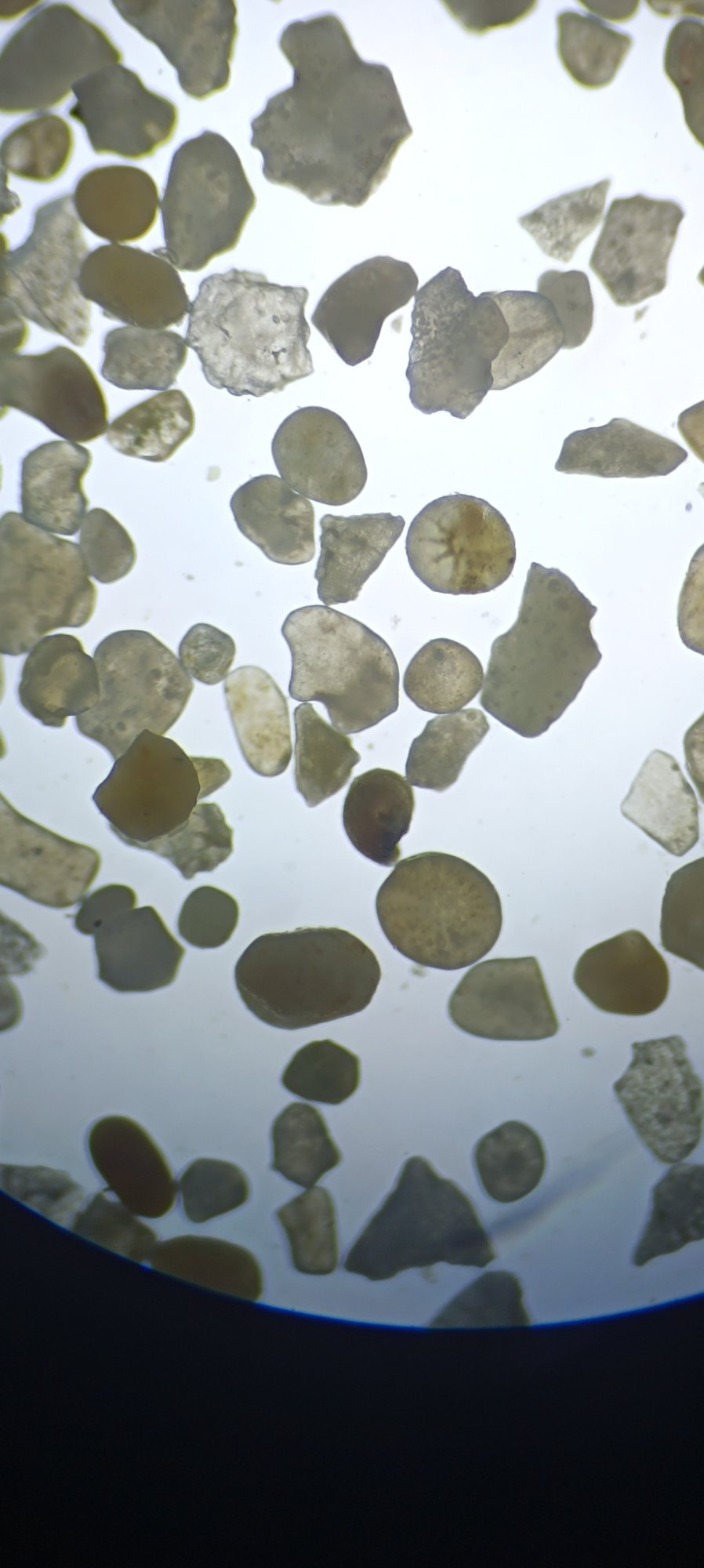
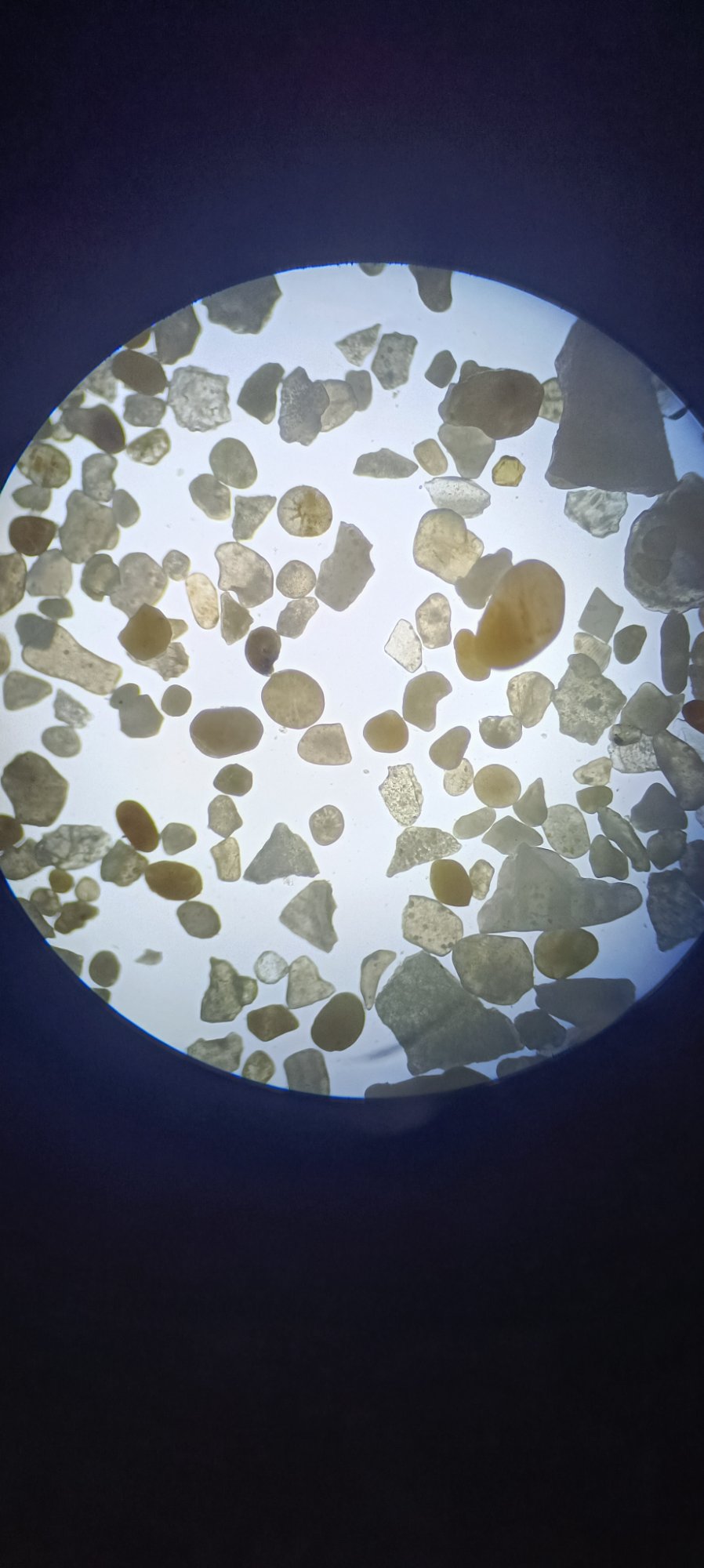
Sediment samples mounted on slides, lit from below, observed at field magnification. Calcareous foraminifera shells, agglutinated tests, and the mineral grains they share their world with — five plates from the Jumeirah survey, January 2026.
Mixed assemblage. Calcareous shells alongside translucent biogenic fragments. The amber-toned specimen, lower-left, exhibits the smooth chambered morphology characteristic of stress-tolerant taxa.
Coiled test — centre frame. A planispiral foraminifera with clearly visible chamber arrangement. One of several morphotypes documented during the survey; uploaded to iNaturalist for global record.
Heterogeneous grain field. Mineral particles, shell fragments, and a faint coiled foram visible above-centre. The matrix tells you everything about how the beach is being moved.
Translucent specimens. Smaller chambered shells silhouetted against transmitted light — the moment foraminifera stop being theory and start being neighbours.
Full field of view. A complete microscope frame — the kind of image 25 citizen scientists watched form in their own eyepieces. Approximately 5–6 distinct morphotypes are visible in this single composite.
"The shoreline became a living dataset. Every grain of sand a record of what we have done to the sea — and what the sea is still doing, quietly, beneath our feet."
— Komorebi Impact Report, January 2026
A rare bridge between academic research and public engagement — making marine microbiology accessible to university students, early-career researchers, and curious members of the public in one evening on a Dubai beach.
Several foraminifera taxa observed and documented during this study had never previously been published or recorded on iNaturalist globally — filling genuine gaps in open-access biodiversity knowledge.
The standardised data from six coastal sites creates a seasonal baseline — against which future summer and transitional surveys can be compared as climate and coastal management practices change.
| Parameter | Range recorded | Ecological significance |
|---|---|---|
| Sediment pH | 7.50 – 7.59 | Reflects organic decomposition, grooming disturbance |
| Salinity | 29.2 – 39.9 ppm | Wide gradient — favours euryhaline stress-tolerant species |
| Water temperature | 22.3 – 23.9 °C | Winter-stabilised community; summer contrast will be significant |
| Sampling depth | ~10 cm cores | Upper 1–2 cm highest abundance and diversity |
| Species documented | 5–6 distinct morphotypes | Notable for an urbanised Arabian Gulf beach |
| Tidal window | Low tide 8:18 PM | Maximum intertidal exposure; optimal for sampling protocol |
This project demonstrates that low-cost, citizen-led research can yield scientifically valuable results. That urban beaches are not biologically empty. That foraminifera — patient, ancient, invisible — are ideal ambassadors for linking science, conservation, and public awareness.
And that when you give people the tools to look closely, they will never look at the sea the same way again.