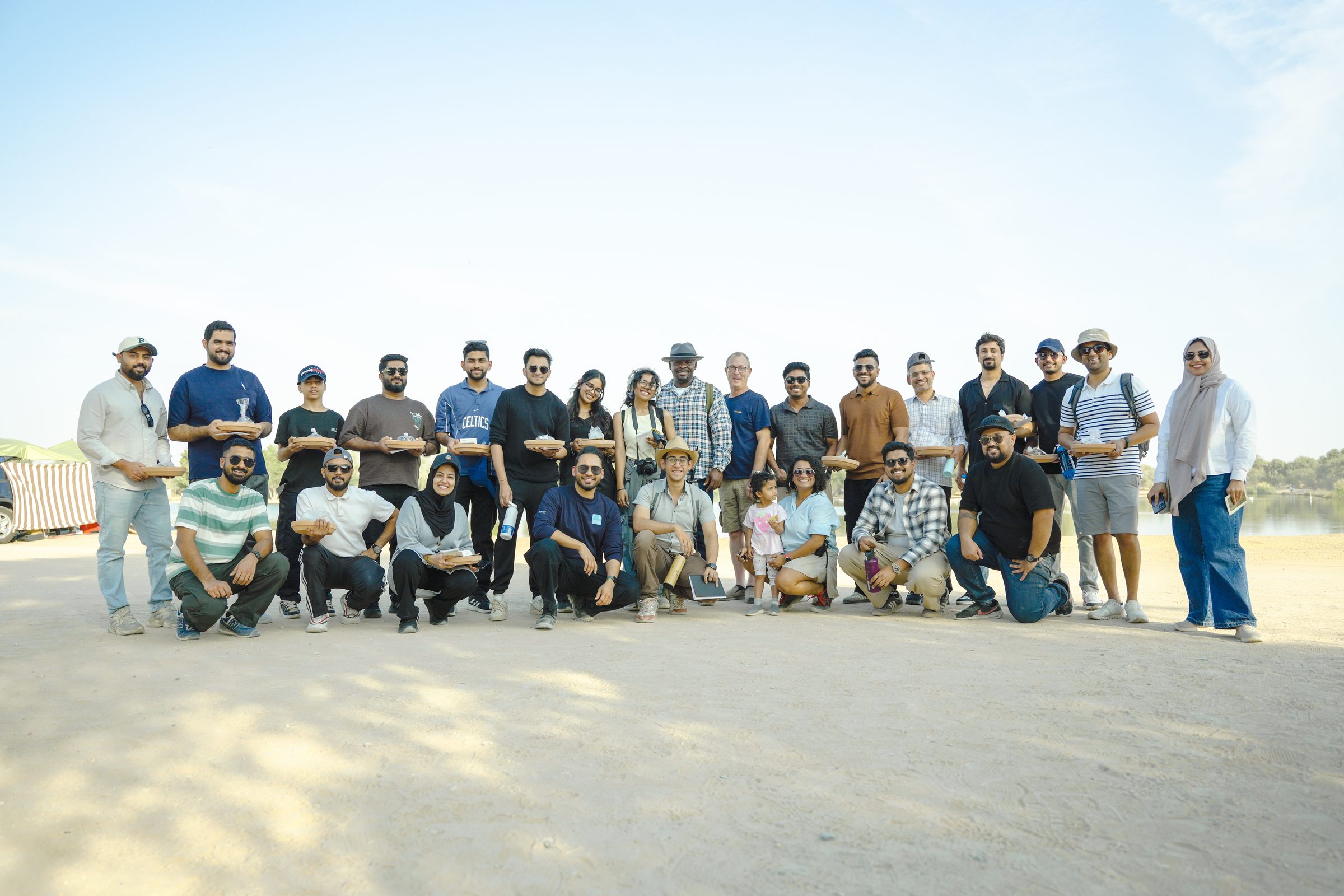
A four-hour sunset safari at Al Qudra Lakes — where 25 people became field biologists, seed-bomb makers, and quiet guardians of the UAE desert.
The Desert Biodiversity Discovery Experience was not an event. It was a designed encounter — a carefully choreographed four-hour immersion into the living world of Al Qudra Lakes, one of the UAE's most extraordinary desert wetland ecosystems.
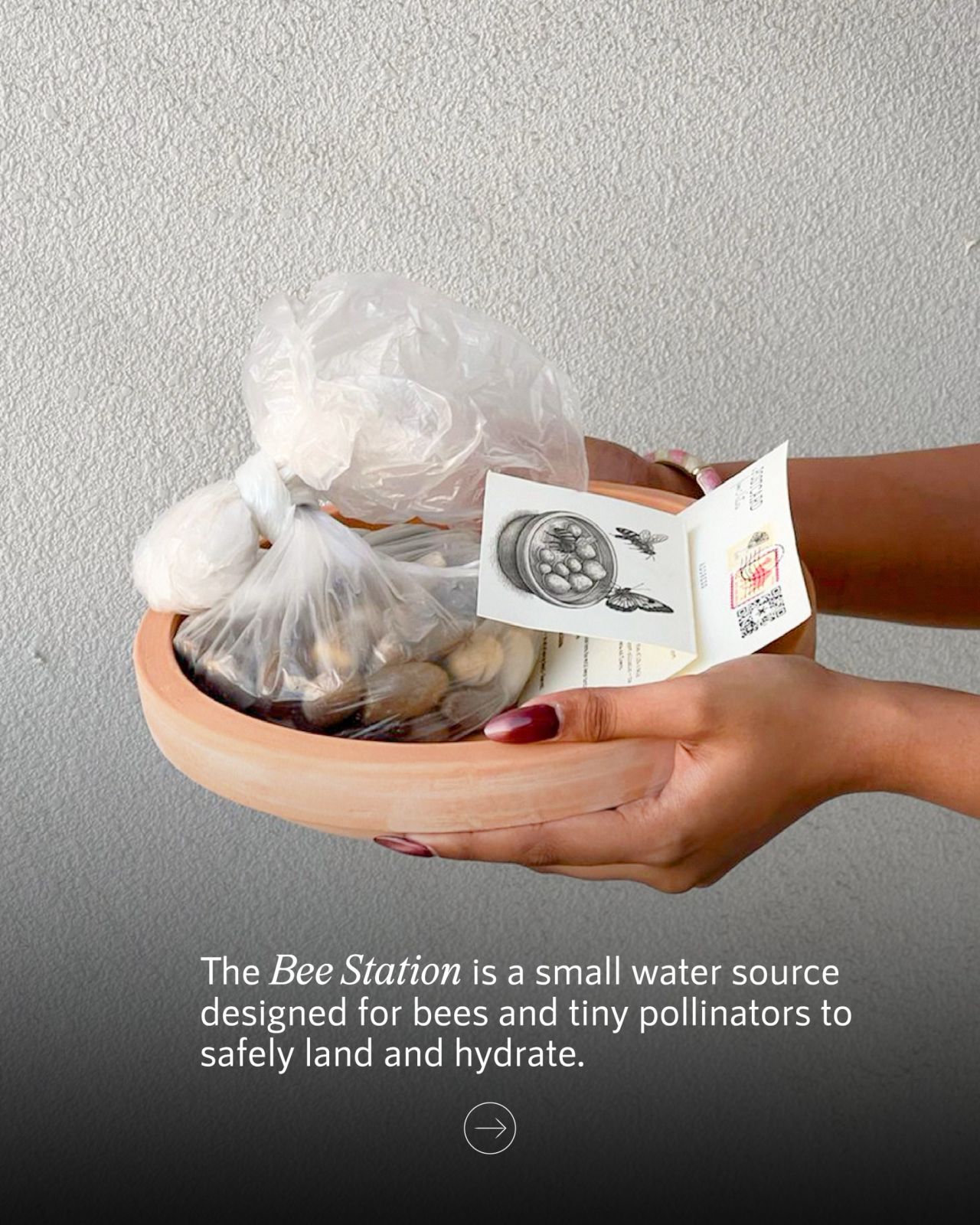
Komorebi designed every detail: the field survey kits, the iNaturalist protocol, the discovery scorecard, the seed bomb recipe, the pollinator water station giveaway, the navigation map, the field guide. Nothing was accidental. Everything was in service of one outcome: that people would leave seeing the desert differently. Forever.
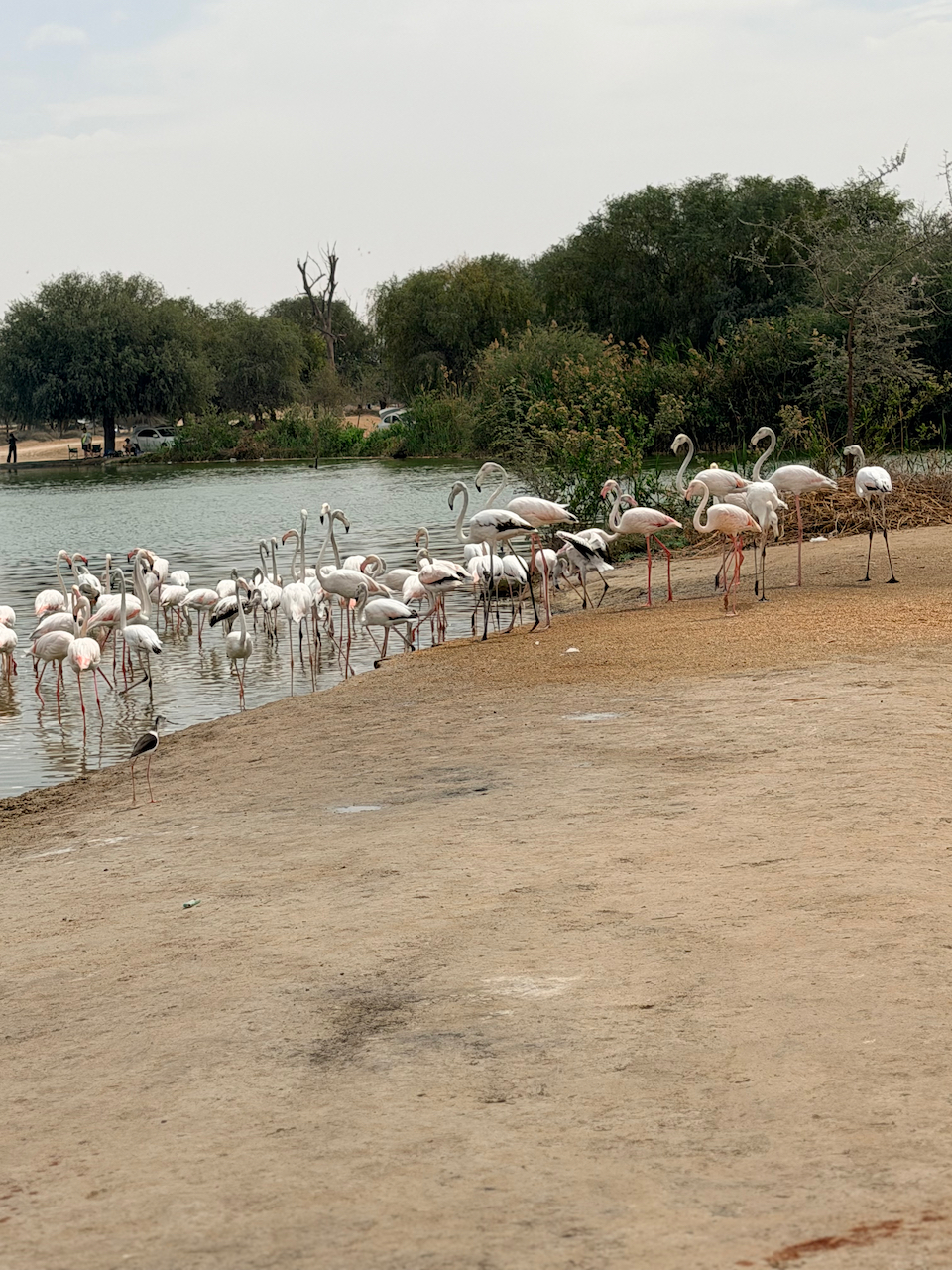
Al Qudra Lakes — a network of man-made desert wetlands inside the Al Marmoom Desert Conservation Reserve — supports migratory birds along the Afro-Eurasian flyway, Greater Flamingos, Arabian Gazelles, Red Foxes, Arabian Honey Bees, and dozens of native plant species. Most visitors drive past it on the way to a picnic.
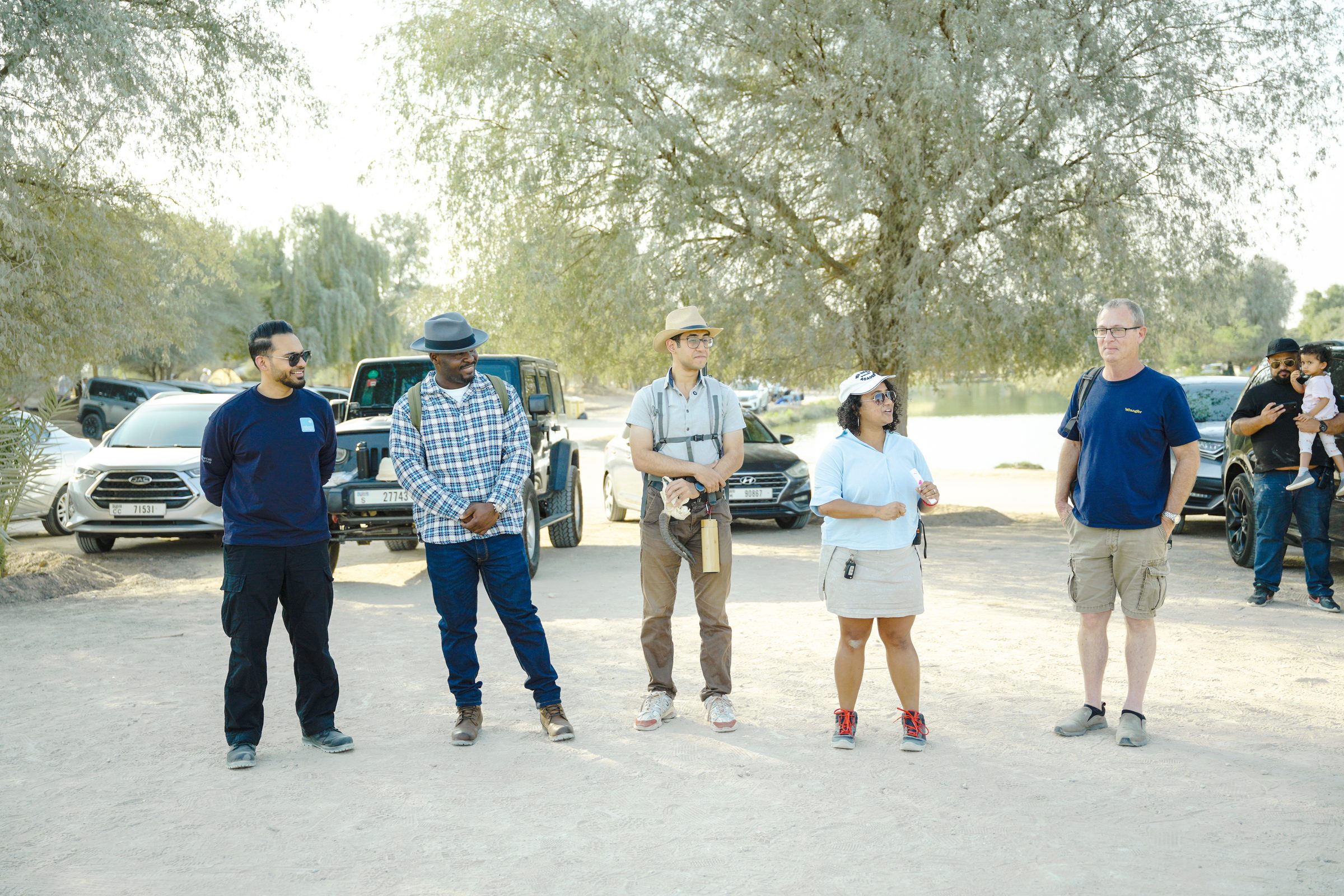
Families worked as mixed-age teams. Children became the spotters. Adults became the recorders. Biodiversity expert Erfan Firouzi anchored the science. And the desert — patient, abundant, ancient — did the rest.
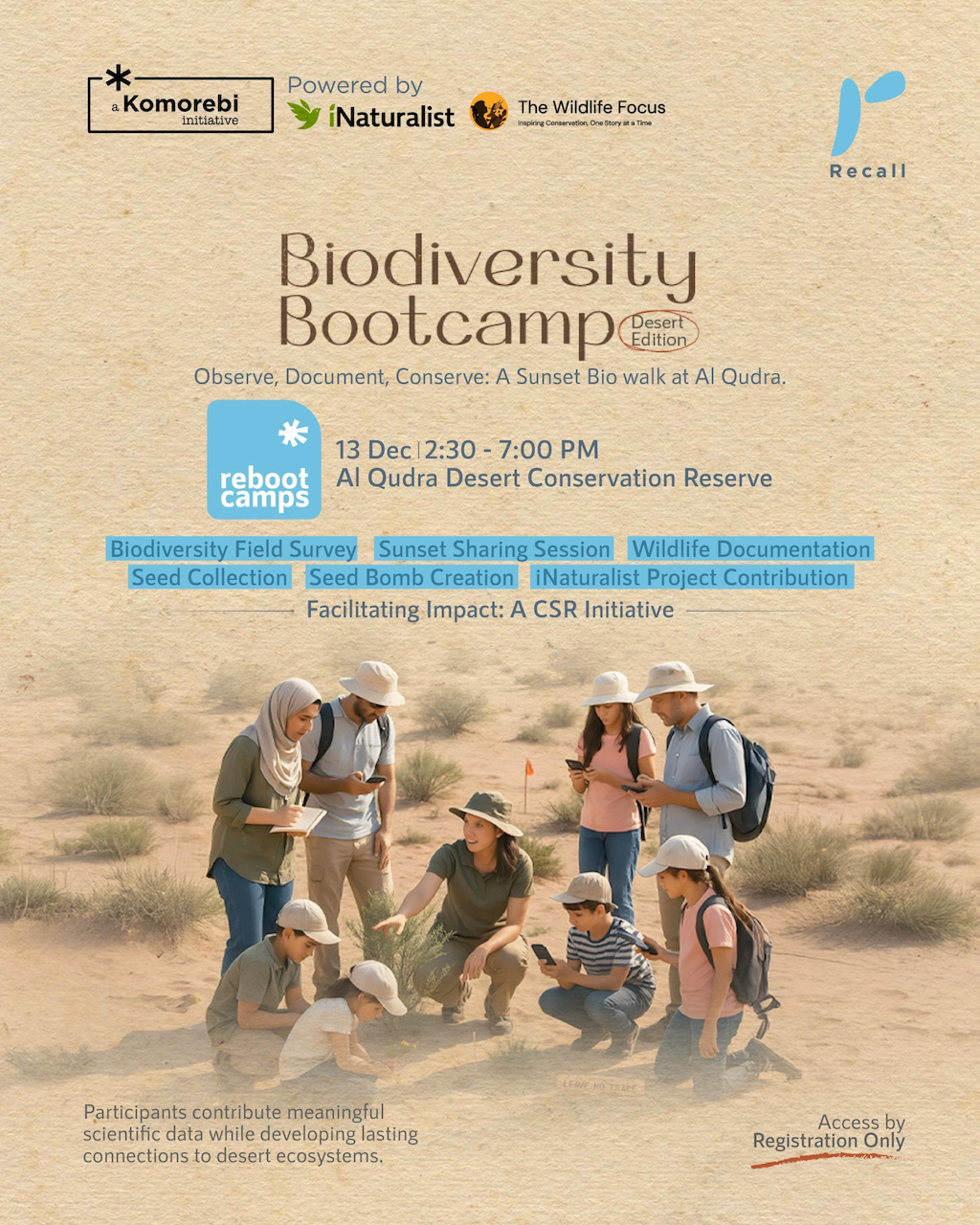
The event poster set the aesthetic: warm sand tones, handcrafted typography, scientific credibility without intimidation. A Komorebi initiative, powered by iNaturalist and Wildlife Focus. Participants contributed real conservation data while developing lasting connections to desert ecosystems.
Welcome, team formation, expert briefing on UAE biodiversity, ethical observation guidelines, and distribution of field survey kits — binoculars, identification guides, data sheets, discovery scorecards.
Teams disperse to assigned zones across Al Qudra's diverse habitats — lakeside, dunes, grasslands, rocky terrain. Wildlife documentation, photography for iNaturalist, native seed collection, educational plaque placement.
Arabic coffee, dates, and lake views. Each team shares discoveries and best photographs. A lead expert tallies total species documented. Collective wonder at what the desert was holding all along.
Participants mix collected native seeds with clay and compost — 5–10 seed bombs each. Every person leaves with a Pollinator Water Station Kit. A daily reminder that conservation starts at home.
A curated field guide designed by Komorebi with expert Erfan Firouzi — given to every participant on arrival.
Open-access. No email gate. Print, fill, share — at your next walk, with your own children, or with a community of strangers waiting to become field scientists.
Beyond the numbers: participants left with an entirely new relationship to the desert. They had been scientists for an afternoon. They had contributed real data to global conservation platforms. They had made things with their hands — seed bombs, pollinator stations — that would keep working long after they drove home.
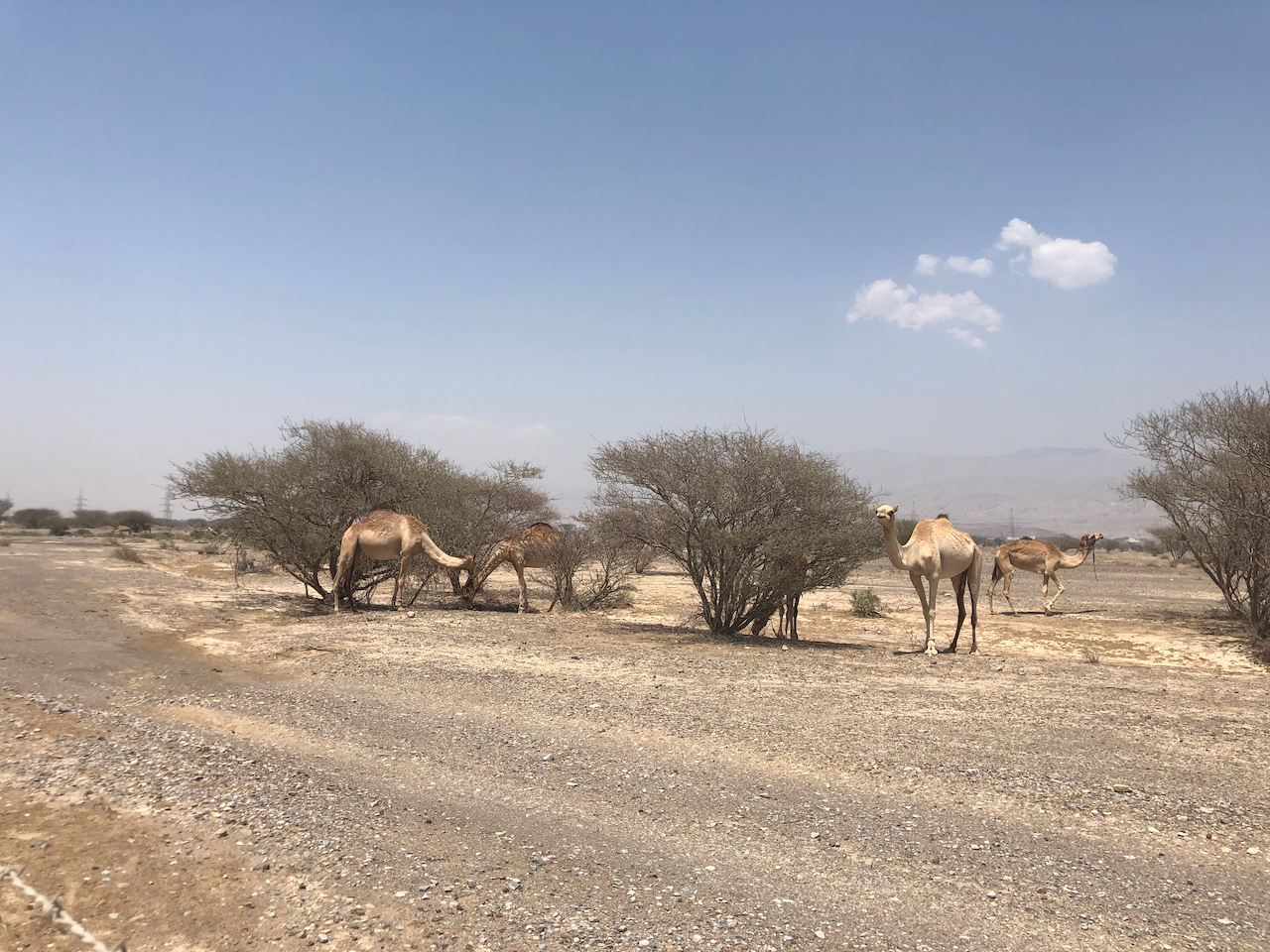
December 2025. A four-hour sunset safari. 25 strangers became field biologists. Flamingos at the lake. Camels in the brush. Found bones. Sunset trays passed hand to hand. This is what citizen science looks like when it's designed with care.
Recorded by Biodiversity Bootcamp during the Al Qudra walk — the rhythm of the safari, the species, the participants, all in one short clip. Watch it on LinkedIn:
The Desert Biodiversity Discovery Experience was designed as a model — replicable quarterly, scalable to 50 participants, adaptable to any season. Each season reveals different species. Each event builds a slightly larger community of people who have chosen, once, to pay attention.
That is the ripple effect. One afternoon. One field guide. One seed bomb. One person who now checks on their pollinator station every morning before work.
The desert is never barren again.