Two phases of CHF-funded conservation work in Kolkata. Temples along the Adi Ganga that appeared in Satyajit Ray's Pather Panchali. Cemeteries that hold the city's colonial past like a green lung. And Komorebi as the voice that carried it all.
The Queen Elizabeth II Platinum Jubilee Commonwealth Heritage Skills Training Programme was launched in May 2022 to train over 3,500 young people in hands-on conservation skills across the Commonwealth.
In Kolkata, this became two extraordinary projects — led by Dr. Neeta Das of NSDA, funded by CHF, and communicated to the world by Komorebi.
Kolkata is a city of extraordinary built heritage — colonial cemeteries that are urban forests, terracotta temples that stand on the banks of a dying river, craft traditions that exist nowhere else on earth. It is also a city where heritage is at constant risk: from neglect, from inappropriate repair, from a city growing faster than it can remember itself.
These two CHF projects are an answer to that urgency. And Komorebi's role — named formally in both final reports — was to make sure the world could see what was being saved, and why it mattered.
The South Park Street Cemetery — one of the earliest non-church cemeteries in the world — is home to over 1,600 graves and at risk of disappearing. 13 multidisciplinary interns spent months studying the cemeteries from every angle. Three sensitisation workshops drew nearly 90 participants. An international AUDA seminar broadcast the findings worldwide.
Tania Das mapped the cemeteries' role as a green lung and carbon sink — showing they could form part of a living ecological corridor connecting the East Kolkata Wetlands to the River Hooghly.
History, anthropology, architecture, landscape ecology, structural engineering, English literature.
Three sensitisation workshops — open to professionals, scholars, children, and citizens.
Research disseminated globally — launchpad for the Imagining Timeless Places competition.
Ishita Das listed officially as Communication Designer in the final report.
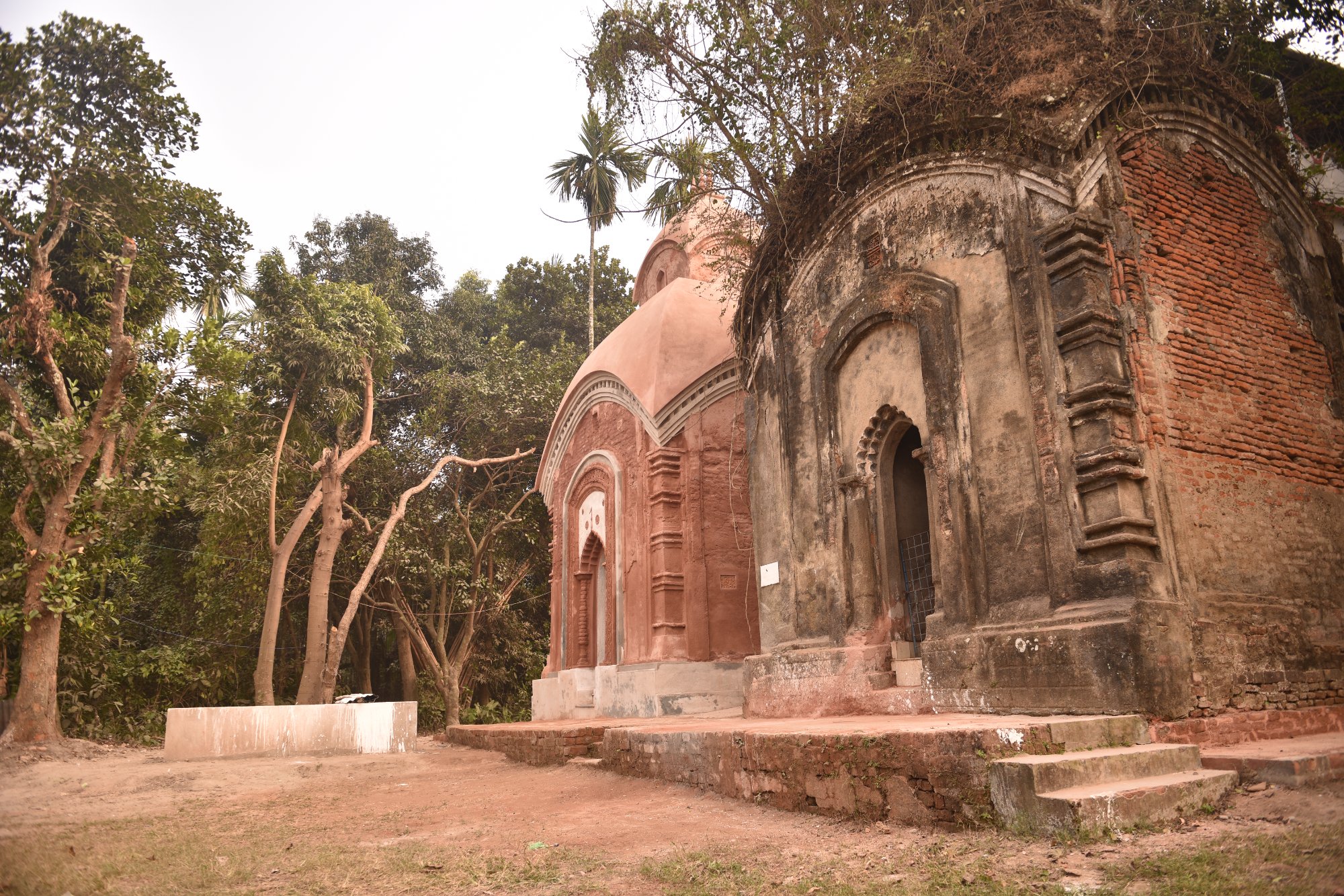
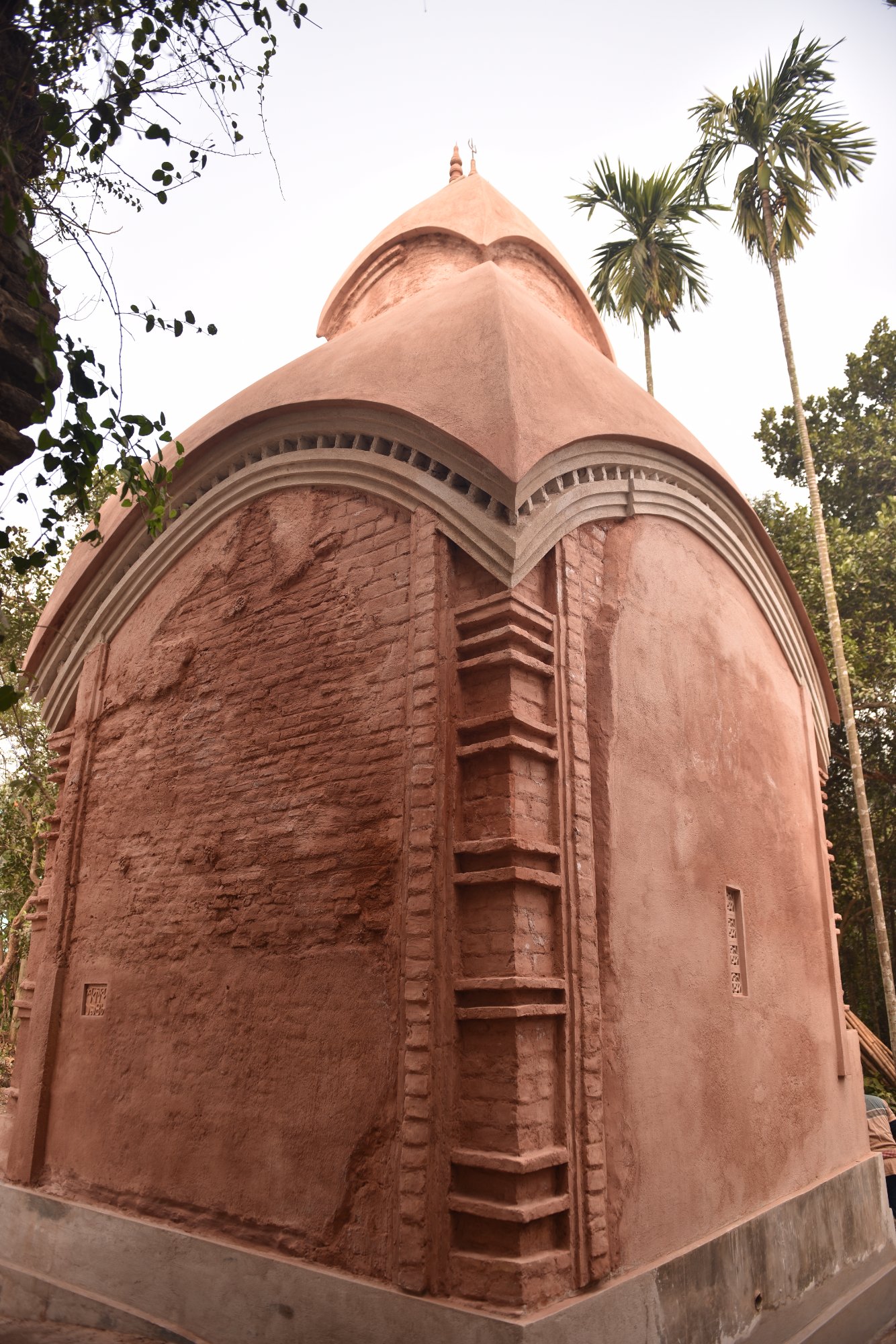
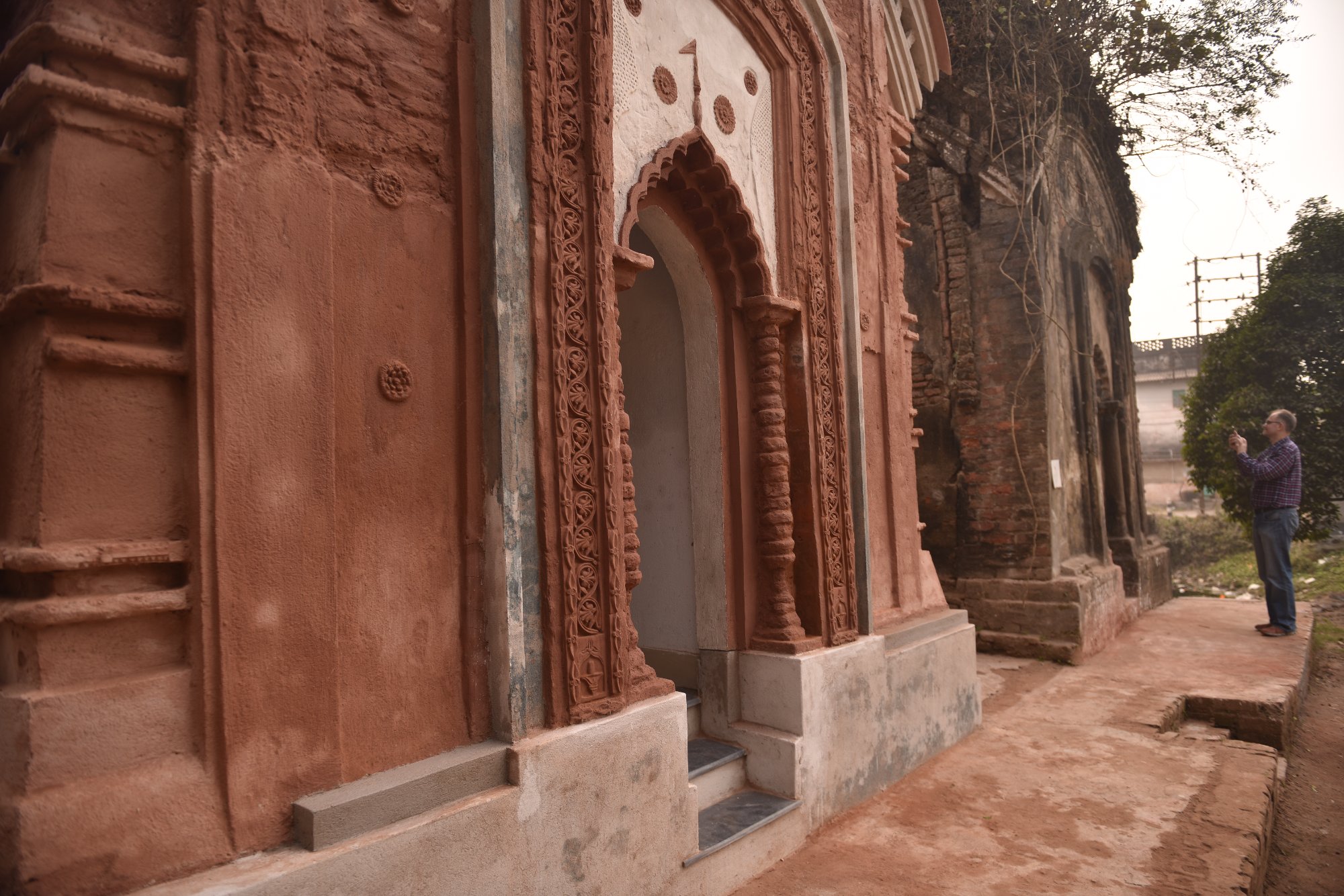
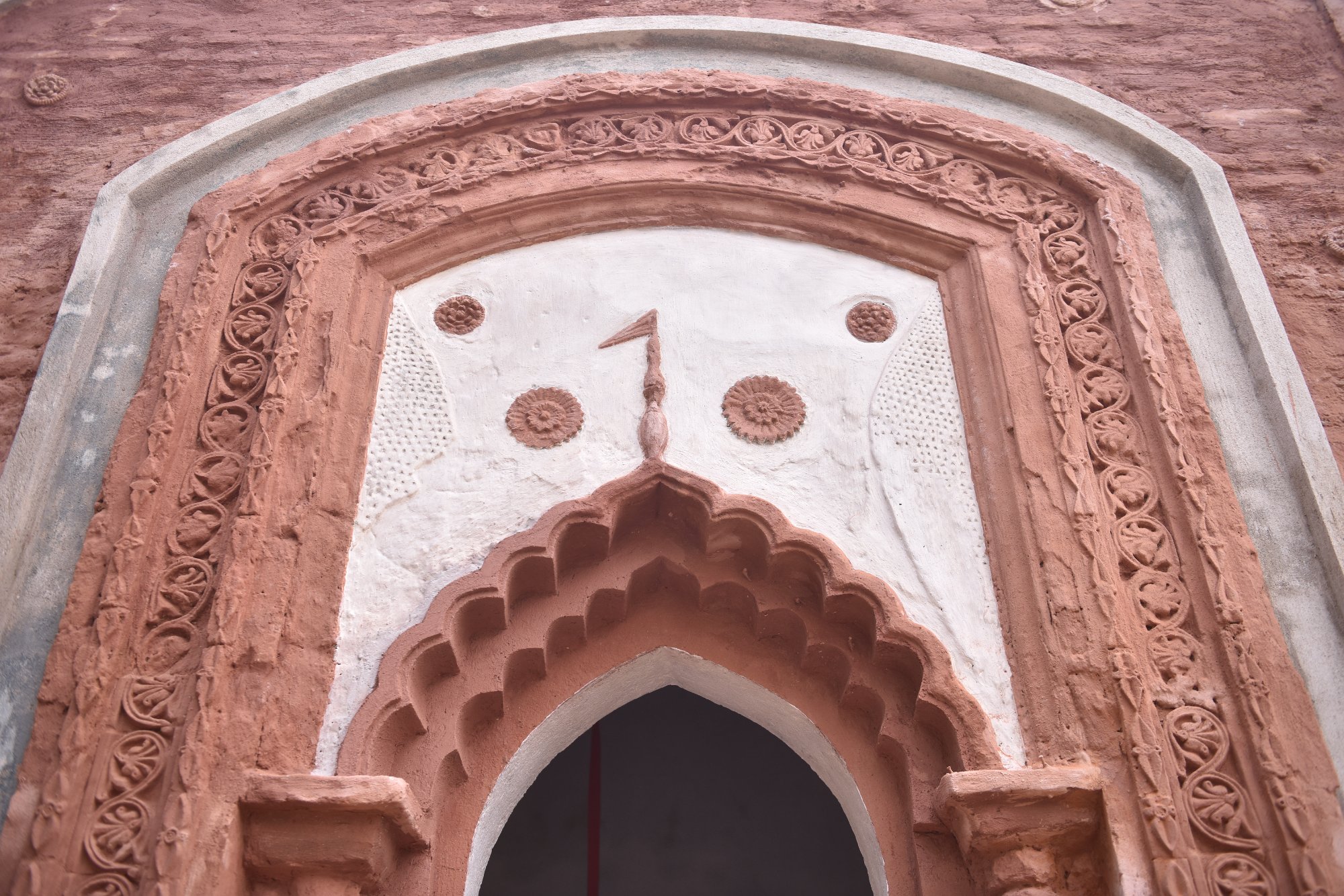
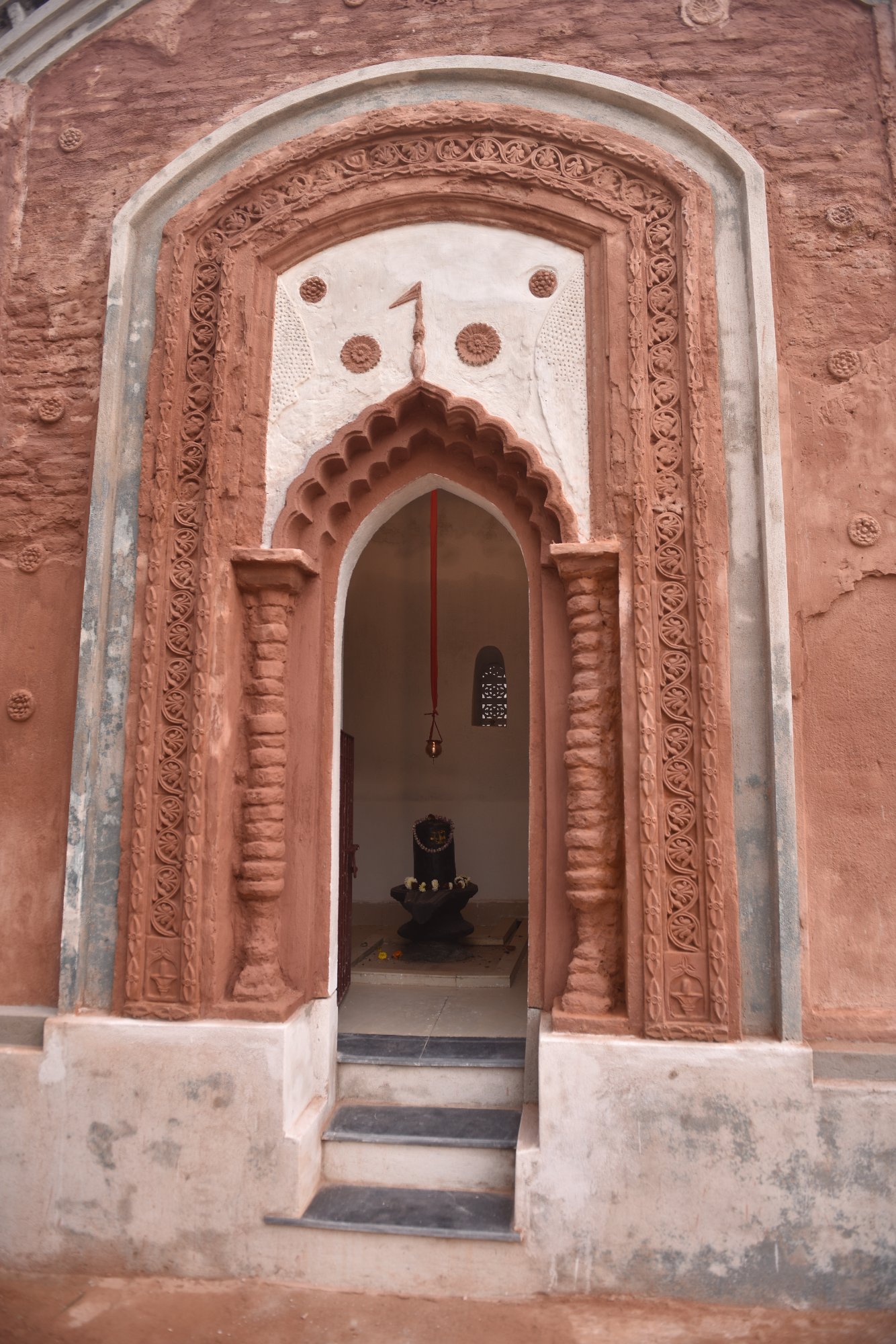
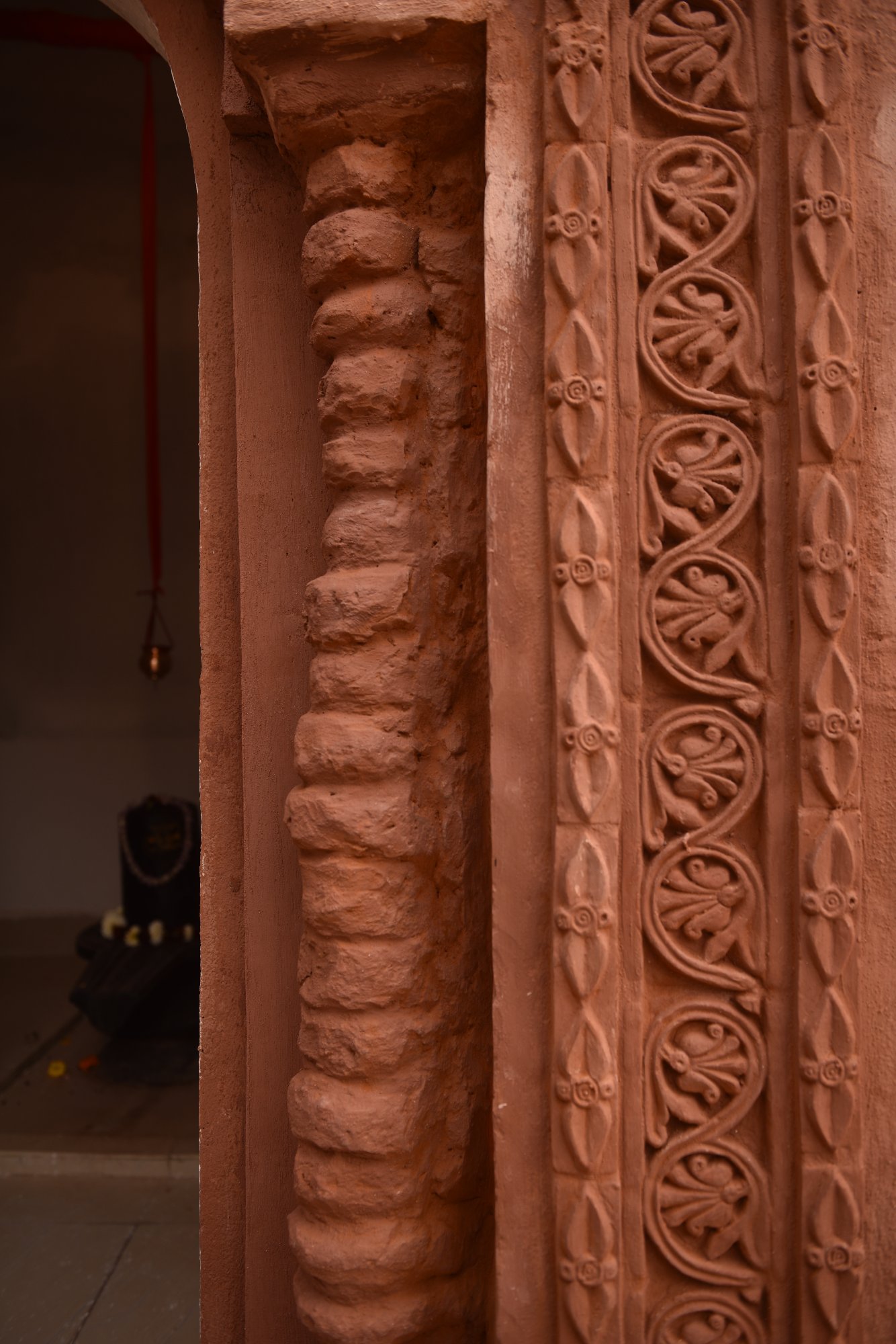
The Jora Shiva Temple at Bokultala Math, Boral — the first-of-its-kind model restoration in India. Plaster of Paris moulds were made from surviving original motifs. Tiles fired in Murshidabad using traditional methods. Lime mortars revived. The temple crown reconstructed using stacked clay forms. Every decision guided by craft knowledge, not industrial material.
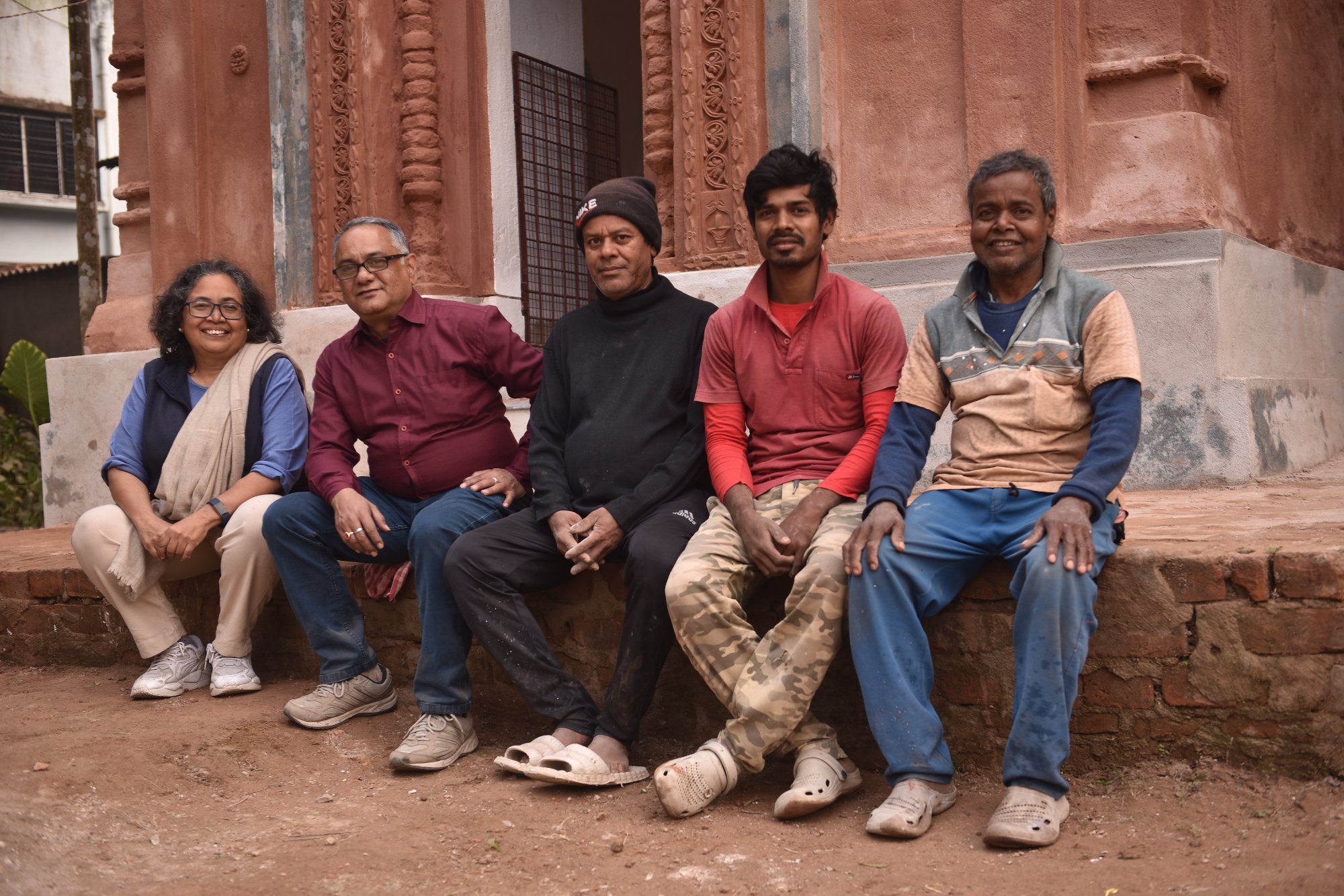
13 interns — multidisciplinary, young — trained alongside master conservators and local artisans. Ten NGOs engaged. Children from the neighbourhood participated in drawing competitions. The restoration concluded with a reconsecration ceremony on 28 December 2025.
Material-led, community-anchored, craft-reviving. The most authentic terracotta restoration attempted.
Moulds by Tamal Bhattacharya. Bricks by J.N. Pal & Son — traditional craft supply chains reactivated.
The Jora Shiva twin temples appeared in Satyajit Ray's 1955 masterpiece.
The temple returned as a living cultural and spiritual space — not a museum piece.
Dr. Neeta Das. Architects. Historians. Ceramicists. Master artisans. 13 interns. 10 NGOs. A community. And Komorebi — formally named Communication Designer in both CHF final reports.
Ishita Das listed alongside architects, conservators, and historians who led the physical work. This is what it means to be the voice of a conservation.
The Jora Shiva twin temples at Bokultala Math appeared in Pather Panchali — Satyajit Ray's 1955 debut film, widely considered one of the greatest works of world cinema. Framed within everyday village life, they stood as silent witnesses to a changing Bengal.
Seventy years later, they are being restored. And the story of that restoration — the craft, the community, the young interns, the reconsecration — is being told by Komorebi. Architecture becoming cinematic memory. Then becoming heritage. Then becoming, again, a living place.
In both CHF project reports, Komorebi is credited formally — not as a vendor, but as Communication Designer.
Ongoing documentation of both phases — translating complex conservation into accessible, beautiful narratives.
Designed and curated official CHF project reports for both phases — the documents that represent this work to funders worldwide.
Registration forms, certificates, posters, and visual identity for the AUDA international seminar.
Official certificates of attendance for workshop participants — CHF's formal acknowledgement of contribution.
Wrote and curated "Stories in the Images" — turning photographs of restoration into a layered, human account.
A third phase begins in 2026. Komorebi's storytelling partnership with CHF and NSDA continues.
34-page official report documenting the cemetery conservation programme for CHF and BACSA.
21-page official report for the Terracotta Temple programme — including "Stories in the Images" narratives.
Continuous documentation of both phases — making conservation accessible, beautiful, and urgent.
Registration forms, feedback forms, certificates of attendance, event posters.
Designed the AUDA seminar posters and event identity — connecting heritage to international urban design education.
The storytelling partnership continues into a third phase of CHF heritage work in Kolkata.
These words, from the official CHF Phase II final report, say everything about how Komorebi works. Not as an outside agency translating someone else's story. As part of the team. Embedded in the work. Named.
The Jora Shiva Temple has been reconsecrated. The craft has been revived. And the story — crafted by Komorebi — lives in the reports, on the feeds, and in the memory of every person who learned why these walls matter.
Reconsecration ceremony — 28 December 2025